


Key takeaways:
- AI infrastructure cost is not one bill. It spans GPUs, cloud compute, model APIs, data platforms, Kubernetes, storage, networking, and shared services.
- Every layer reports cost differently. Cloud billing, GPU telemetry, Kubernetes metrics, and token usage all use different formats that need to be reconciled.
- GPU utilization does not tell the full story. Idle clusters can still carry reserved capacity, power, cooling, depreciation, and operational costs.
- Agentic workflows make spend harder to predict. One user request can trigger multiple model calls, tool actions, retries, and orchestration steps.
- AI cost measurement breaks without attribution. Teams need to connect usage signals to workloads, models, features, teams, customers, and business outcomes
Best For: Finance leaders & FP&A | FinOps Practitioners | IT & Engineering leaders | MSP and cloud partners
What is AI Infrastructure?
AI infrastructure is the hardware, software, data, and networking stack that powers, scales, and hosts AI models. It includes the systems enabling AI training and inference, from GPUs, TPUs, cloud compute, and storage to Kubernetes, model APIs, orchestration tools, and monitoring platforms.
NVIDIA defines AI infrastructure as the hardware and software technologies designed to support the development, deployment, and management of AI models and applications, with a focus on performance, scalability, and efficiency for AI workloads.
Understanding what AI infrastructure includes is the starting point. Measuring what it costs to operate at the workload, team, model, feature, and customer level is where the problem becomes more complex.
What is Driving AI Infrastructure Costs?
AI infrastructure cost includes every system required to train, fine-tune, deploy, serve, monitor, and govern AI workloads.
That includes visible costs such as:
- GPUs and TPUs
- Cloud compute and storage
- Model APIs and token usage
- Training, inference, and fine-tuning
- Provisioned model or compute capacity
It also includes the underlying infrastructure and operational costs behind the workload, including:
- Data pipelines and data platforms
- Vector databases and embeddings
- Kubernetes and orchestration frameworks
- API calls and workflow execution
- Observability, monitoring, and logs
- Network egress, bandwidth, and latency management
- Shared infrastructure and platform overhead
For enterprises running AI in private data centers, the cost base expands further. GPU clusters need power, cooling, rack space, networking, memory bandwidth, fault tolerance, and long-term capacity planning. McKinsey notes that power and cooling equipment are core parts of AI data center infrastructure, while the IEA projects data center electricity consumption will more than double by 2030, with accelerated servers accounting for nearly half of the net increase in global data center electricity consumption.
That is why AI infrastructure cost cannot be measured only through a cloud bill or a token report. The same AI workload can touch cloud compute, GPUs, data platforms, model APIs, storage, orchestration, and network services before it produces one output.
Why AI Infrastructure Costs Are Hard to Measure
AI infrastructure costs are hard to measure because the cost signals were not designed to work together. Each layer speaks a different cost language, and none of those signals automatically explains which workload, feature, team, customer, model, or agent created the spend.
Four structural factors make AI infrastructure costs difficult to measure.
1. AI Infrastructure Spans Multiple Environments
AI infrastructure costs are hard to measure because each layer reports usage in a different format. Cloud billing shows compute and storage. GPU telemetry shows utilization. Model APIs show tokens. Kubernetes shows resource allocation.
Each signal is useful, but none tells the full story on its own. The challenge is that every environment speaks a different cost language, and those languages do not reconcile by default.
Every Layer Speaks a Different Cost Language.
Each layer of AI infrastructure reports in incompatible units. None were designed to be reconciled against each other.
Cloud Billing
Reports In
Billing cadence: monthly invoice by resource type
GPU Telemetry
Reports In
Billing cadence: real-time hardware metrics
Model APIs
Reports In
Billing cadence: per-request consumption
Kubernetes
Reports In
Billing cadence: resource allocation per namespace
Unified Workload-Level Cost View
Does not exist by default. Requires deliberate instrumentation and allocation logic built across all four environments.
Figure 1.1. Cost signals across the AI infrastructure stack.
A single AI workload may use:
- Public cloud platforms
- On-prem GPU infrastructure
- Managed model APIs
- Kubernetes clusters
- Data platforms
- Vector databases
- Hybrid orchestration systems
Each system reports usage in its own format. Cloud billing systems report infrastructure costs. Kubernetes exposes CPU, memory, pod, namespace, and resource usage. GPU telemetry tools report hardware utilization, memory usage, and accelerator activity. Model APIs report input tokens, output tokens, cached tokens, and request volume.
Finance may see spend by provider. Engineering may see resource usage by system. Product may need cost by feature or customer. Without a shared layer connecting those views, the organization can see activity but not the full economics of the AI workload.
This is the foundation of AI cost visibility: connecting infrastructure, usage, and business context so teams can understand where spend is coming from and what it supports.
2. GPU Utilization is Difficult to Interpret
GPUs are often one of the largest cost drivers in AI infrastructure, but GPU cost cannot be understood by counting how many GPUs are deployed.
A GPU cluster may be purchased, reserved, assigned, and still economically underused. If a cluster is running at 30% utilization, the infrastructure may look allocated on paper while the effective cost per workload remains high.
To understand GPU cost, teams need to measure:
- Utilization rate
- Idle capacity
- Workload scheduling
- Cluster fragmentation
- Memory usage and memory bandwidth
- Reserved capacity versus variable demand
- Power and cooling requirements
- Network and interconnect performance
This matters because GPU costs do not disappear when demand is low. Idle clusters can still carry reserved capacity, depreciation, power, cooling, support, and operational overhead. For teams managing private or hybrid GPU environments, this is also where data center cost governance becomes part of the AI cost conversation.
Utilization can also be misleading because compute is not always the limiting factor. Memory bandwidth, storage throughput, networking, and interconnect performance can limit workload performance before GPUs reach full utilization.
The cost model also changes as AI hardware refresh cycles accelerate. A cluster that looks efficient today may face upgrade pressure sooner than expected as newer accelerators improve inference efficiency, throughput, or memory performance.
GPU utilization is useful, but it is not enough on its own. The better question is what each workload costs after utilization, scheduling, infrastructure constraints, and business context are connected.
3. Shared Infrastructure Makes AI Cost Allocation Hard
AI infrastructure is frequently shared across teams, models, applications, tenants, and customers.
Common examples include:
- Shared GPU clusters
- Shared Kubernetes environments
- Shared inference services
- Centralized model platforms
- Shared storage systems
- Shared vector databases
- Shared observability tools
Because the infrastructure is shared, the cost of one AI agent, application feature, or workload is rarely obvious from the bill alone.
A centralized GPU cluster may support training jobs for one team, batch inference for another team, and model serving for a customer-facing product. A shared OpenAI or Azure OpenAI account may serve multiple products. A shared vector database may support several AI features. A shared Kubernetes cluster may run workloads owned by different business units.
Without workload-level attribution, those costs often accumulate in a central infrastructure budget The FinOps Foundation’s shared cost allocation guidance highlights this problem directly: shared infrastructure becomes difficult to govern when ownership and usage cannot be tied back to the teams or workloads creating the spend.
To allocate shared AI infrastructure cost, teams need usage signals such as:
- GPU time
- CPU and memory usage
- Model inference calls
- Token usage
- Request volume
- Compute cycles
- Storage I/O
- Network traffic
- Workflow steps
- Customer, tenant, product, feature, and team metadata
The goal is enough attribution to support attribution analysis and answer who used the infrastructure, what they used it for, and what business outcome it supported.
4. Consumption-Based Pricing Is Reshaping AI Economics
AI infrastructure costs are becoming harder to manage as AI services shift toward consumption-based pricing models. Instead of fixed software licensing, enterprises are increasingly paying based on usage: tokens, inference requests, embeddings, retrieval calls, orchestration steps, or agent execution volume.
That shift is changing how AI costs appear across the enterprise. GitHub recently announced that GitHub Copilot is moving toward usage-based billing, while SAP has discussed consumption pricing for AI agents as autonomous workflows begin reshaping traditional SaaS pricing models.
Examples of AI consumption pricing include:
- Token pricing for model APIs
- Usage-based inference platforms
- Provisioned model capacity
- Embedding generation
- Vector search
- Serverless AI services
- Agentic workflow execution
These services introduce cost signals that need to be connected back to infrastructure usage and business activity. A model API bill may show token consumption, but not the cloud compute used for orchestration. A GPU bill may show infrastructure cost, but not which model call, customer workflow, or agent interaction created the demand.
Agentic workflows make this harder. A single request may trigger multiple model calls, retrieval steps, retries, API actions, and orchestration tasks behind the scenes. What appears as one interaction from the user’s perspective may create several independent cost events across the stack.
For example:
- GPU infrastructure may power training or inference
- Model APIs may generate completions or embeddings
- Cloud compute may handle orchestration
- A vector database may retrieve context
- Storage may retain embeddings, logs, and outputs
- Monitoring systems may capture traces and performance data
- AI developer tools may introduce seat-based or usage-based licensing
Understanding the cost of that workload requires combining all of these signals into one economic view.
AI coding and developer tools introduce a related challenge. Enterprises may deploy tools such as GitHub Copilot, Cursor, Claude Code, or similar AI engineering platforms across hundreds or thousands of developers, but still lack visibility into utilization, workflow impact, or cost by team, project, or product. As AI pricing becomes increasingly consumption-driven, usage without attribution becomes another financial control problem.
The Result: Teams Can See Spend but Not What Drives It
Right now, enterprises can see total AI infrastructure spend. They can pull a cloud bill, check model provider usage, review data platform invoices, or look at GPU commitments.
What they often cannot see is:
- Cost per AI workload
- Cost per model
- Cost per application feature
- Cost per team or business unit
- Cost per customer or tenant
- Cost per agent run
- Cost per inference
- Cost per workflow
Without these metrics, leaders struggle to answer the questions that matter for financial control:
- Which AI workloads are the most expensive?
- Which teams consume the most GPU capacity?
- Which models are driving cost growth?
- Are infrastructure investments being used efficiently?
- Which AI features are eroding margin?
- What does it cost to deliver a specific AI capability?
This is where cost-to-serve becomes a critical metric. Cost-to-serve translates infrastructure spending into unit economics for AI services, products, customers, features, and outcomes.
The Hidden Costs That Often Go Unnoticed
By this point, the pattern is clear: AI costs rise because the work behind each AI output spreads across systems, tools, and teams that standard reports only partially capture.
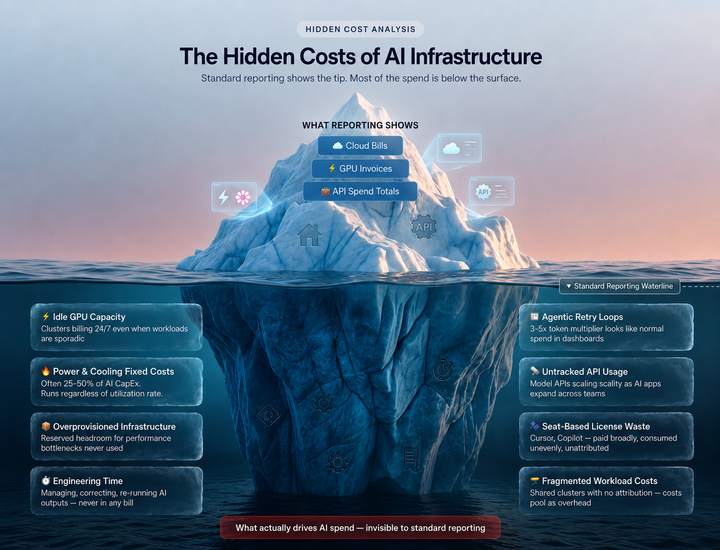
Figure 1.2. Operational patterns that increase AI infrastructure costs outside standard billing views.
These costs are easy to miss because they do not always appear as separate line items. They often show up as higher infrastructure totals, unexplained usage growth, lower utilization, or margin pressure that is hard to trace back to one workload.
That is what makes them difficult to govern. The issue is that they accumulate across the parts of the AI stack where ownership, usage, and business context are often unclear.To manage them, teams need to connect spend back to the operational behavior that created it: which workload ran, which systems it touched, how often it retried, what capacity it consumed, and which team, feature, customer, or agent it supported.
What Organizations Need to Measure AI Infrastructure Costs
Once the cost drivers are known, the next step is deciding which signals are required to explain them. A useful measurement model should show what ran, what it consumed, who owned it, and what outcome it supported.
| Infrastructure Signals | Workload Signals | Business Signals |
|---|---|---|
| GPU utilization | Inference activity | Cost per customer |
| CPU and memory usage | Token consumption | Cost per product |
| Infrastructure billing data | Workflow and agent steps | Cost per feature |
| Kubernetes resource usage | Embedding and retrieval activity | Cost per team |
| Storage and network usage | Model and API activity | Cost-to-serve |
| Reserved capacity | Code assist utilization | Business outcome attribution |
When these signals are connected, organizations can begin measuring the economics of AI workloads in operational terms instead of isolated infrastructure metrics.
That includes questions like:
- What does this workload cost to run?
- Which teams or products are driving spend?
- Which services are increasing cost-to-serve?
- Which workloads justify reserved GPU capacity?
- Which AI features create margin pressure as usage scales?
The first milestone is usually not optimization. It is establishing a shared financial view that finance, engineering, FinOps, and product teams can all use consistently.
Once those relationships are visible, organizations can move into allocation, chargeback, forecasting, anomaly detection, and full-stack AI cost governance with significantly more precision.
How Mavvrik Approaches AI Infrastructure Costs
Mavvrik treats AI infrastructure costs as an attribution challenge across cloud, on-prem, Kubernetes, GPUs, SaaS, data platforms, LLMs, inference, embeddings, developer tools, and agentic workflows. The platform brings these signals into a single cost model so teams can understand where spend is increasing, who owns it, and how it connects to products, customers, features, workflows, or agents.
For AI workloads, Mavvrik tracks cost across model usage, infrastructure consumption, orchestration steps, and shared resources. These signals can then support showback, chargeback, cost-to-serve, forecasting, anomaly detection, and business-level allocation.
Three ways to continue from here:
- Get visibility into AI infrastructure costs
Start by identifying which workloads are driving spend across cloud compute, GPUs, Kubernetes, model APIs, storage, networking, SaaS tools, hybrid infrastructure environments. - Connect spend to business ownership
Map infrastructure usage, tokens, workflow steps, and shared resource costs to the teams, products, customers, tenants, features, workflows, or agents that generated them. - See how Mavvrik supports this in practice
Explore Mavvrik’s AI Cost Governance platform, take the product tour, or book a demo to see how workload-level tracking and cost-to-serve visibility apply to your environment.
What is AI infrastructure?
AI infrastructure is the hardware, software, data, and networking stack that powers, scales, and hosts AI models. It includes the systems enabling AI training and inference, including GPUs, TPUs, cloud compute, Kubernetes, storage, model APIs, data platforms, and orchestration tools.
Why are AI infrastructure costs hard to measure?
AI infrastructure costs are hard to measure because each layer reports cost differently. Cloud billing, GPU telemetry, Kubernetes metrics, model API usage, data platform credits, storage, and network usage all produce separate signals that must be connected before cost can be attributed to a workload, team, feature, customer, or model.
What are the hidden costs of AI infrastructure?
Hidden AI infrastructure costs often include idle GPU capacity, overprovisioned infrastructure, fragmented workloads, power and cooling, storage growth, network egress, embedding generation, vector search, agent retries, untracked API usage, and underutilized AI developer tool licenses.
How should enterprises start measuring AI infrastructure costs?
Enterprises should start by mapping AI workloads to the infrastructure they use, then attach ownership and business metadata. From there, they can combine usage telemetry, billing data, and workload context to calculate cost per workload, inference, feature, customer, product, or agent.
Why does cost-to-serve matter for AI infrastructure?
Cost-to-serve connects infrastructure spend to business value. It helps finance, product, and engineering understand what it costs to deliver an AI feature, customer interaction, workflow, or agent run, which supports pricing, margin management, showback, chargeback, and investment decisions.

Alexa Abbruscato
Certified FinOps Practitioner & Content Strategist
Alexa is a certified FinOps Practitioner and FOCUS Analyst who translates complex concepts into language that resonates across engineering, finance, and procurement.