Startups are building the next big thing with Google Cloud AI

At Google Cloud’s latest startup showcase, the shift toward agentic AI is clear: startups are building systems that don’t just generate outputs, but take action across workflows. These applications rely on complex stacks of models, GPUs, APIs, and orchestration layers, making AI infrastructure more powerful, but also far harder to track and manage.

As AI moves into production, the challenge is no longer just building agents. It’s understanding what they cost to run, how resources are consumed, and whether they deliver real ROI. This growing complexity highlights the need for full-stack visibility, granular cost attribution, and financial controls across the entire AI ecosystem.
Google Cloud logo

Recent Posts

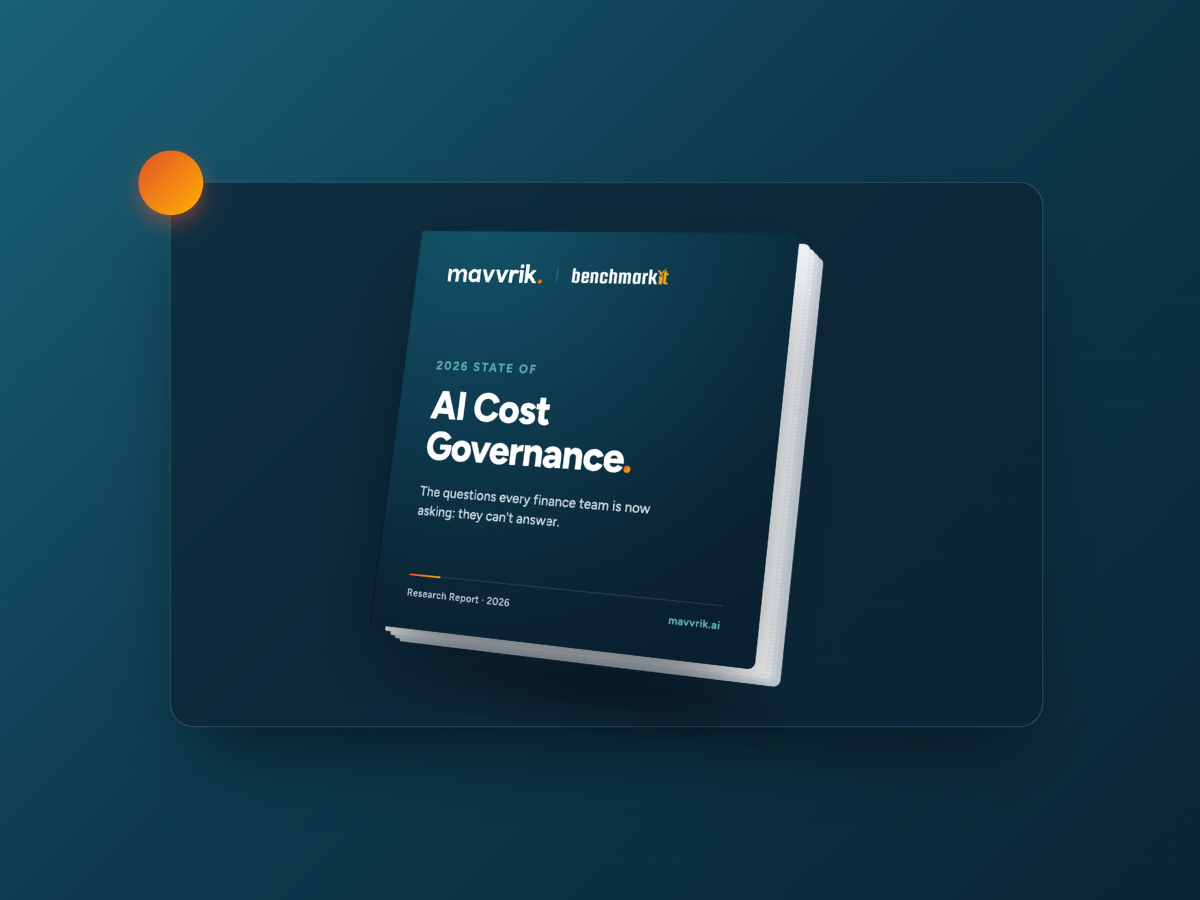
AI cost visibility breaks down when spend is forced into the same monthly reporting model used for cloud infrastructure. This guide covers how to fix it.

Read More

Startups are rapidly building and scaling AI products on Google Cloud, leveraging its full AI stack, from models to GPUs. At Google Cloud Next 2026, companies like Mavvrik are using these capabilities to deliver unified cost visibility and governance across cloud, AI, and SaaS—highlighting how startups are turning complex AI infrastructure into scalable, production-ready systems.

Read More

AI infrastructure costs are notoriously difficult to measure because they don’t live in one place. A single AI workload can span GPUs, cloud compute, model APIs, and shared orchestration layers, each producing its own usage and billing signals. Most organizations can see total spend, but not what drives it.

Read More