
Platform unifies AI cost visibility, attribution, and financial controls across GenAI services, autonomous agents, and the infrastructure powering them
AUSTIN, TX — March 25, 2026 — Mavvrik today unveiled Full Stack AI Cost Governance, bringing together cost visibility, attribution, and unit economics across every layer of the modern AI stack. The release extends Mavvrik’s existing GenAI, cloud, GPU, and SaaS cost management capabilities to include agent-level tracking, addressing the fastest-growing and least-governed layer of enterprise AI spend.
As AI moves into production, costs now span GPU infrastructure, GenAI services, and autonomous agents, running across multiple tools and billing systems with no unified way to see, allocate, or govern them. The result is what Mavvrik calls AI bill shock: cost volatility that arrives as a surprise on invoices rather than as a predictable, manageable line item. And for organizations building AI-powered solutions and services, the stakes go further: without cost-to-serve visibility, there is no reliable way to price AI features, protect margins, or demonstrate ROI.
“The question we keep hearing from customers is the same: what are we actually spending on AI, and is it working? Most organizations don’t have a good answer yet. When AI was experimental, that was manageable. Now that it’s operational, running in products, powering agents, and driving real costs, it isn’t. Mavvrik gives them clarity and control,” said Sundeep Goel, CEO, Mavvrik.
Full Stack Coverage, From Infrastructure to Agents
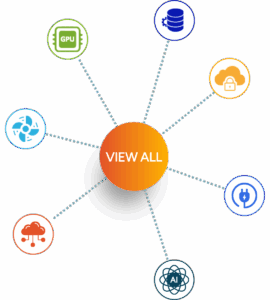
The Mavvrik platform provides unified cost management across the complete AI stack, with visibility, attribution, chargeback, budget controls, and anomaly alerts across four layers:
- GenAI services: token-level cost tracking across major model providers including OpenAI, Anthropic, Google, and Meta, with support for private and fine-tuned models.
- Agentic workloads: multi-step agent workflows, model calls, tool usage, retries, and orchestration overhead — tracked and attributed at the agent and session level.
- Infrastructure: public cloud environments, on-prem GPU clusters, Kubernetes workloads, and accelerated compute across AWS, Azure, GCP, and private environments.
- SaaS and data: consumption-based platforms that power AI workloads, including Snowflake, Databricks, MongoDB, Confluent, and Datadog, with additional sources supported via a flexible CSV connector.
“Building a scalable Agentic Commerce business requires knowing our unit economics at every layer. Mavvrik is the only solution we found that can reliably and effectively provide cost visibility and usage tracking per AI agent, per customer and many other dimensions relevant for SaaS companies. This provides us with the financial foundation that lets us define our pricing while managing our margin to grow our business with confidence,”
– Manish Modh, CEO and Founder, Banavo.ai
Agent-Level Cost Attribution
As part of this release, Mavvrik introduced a new SDK that captures cost and usage data across complex agent workflows. Built on the OpenTelemetry open standard, the system automatically captures token usage, latency, tool calls, and cost for every step of a multi-agent workflow, without requiring changes to existing code.
Developers can attach business context directly to each interaction, including customer ID, feature, workflow, or session. This allows organizations to understand AI costs at a much more granular level, helping teams answer questions such as:
- What does this AI feature cost per customer interaction?
- Which customers generate the highest AI infrastructure cost?
- Are our AI-powered products profitable?
Availability
Mavvrik’s AI Cost Governance solution, including agent-level cost tracking, is available today. The SaaS platform can be deployed immediately, delivering fast time to value, without professional services. For more information, visit mavvrik.ai.
About Mavvrik
Mavvrik helps enterprises take financial control of modern infrastructure. Its platform unifies cost and usage data across cloud, on-prem, SaaS, GenAI APIs, and autonomous agents, giving finance, engineering, and product teams a single authoritative view of what they’re spending, what’s driving it, and what it costs to serve. As AI introduces new layers of unpredictable, consumption-based spend, Mavvrik delivers the visibility, attribution, and cost governance teams need to manage margins and price AI-powered services profitably. Mavvrik is available directly and through a network of channel partners. Learn more at mavvrik.ai and follow us on LinkedIn